
Truth: The First Casualty of Narcissism
“I didn’t say that.”
“You must have misunderstood.”
“I wasn’t there.”
“I would never do that.”
“You’re too sensitive.”
“That’s not how it happened.”
How many of these phrases have you heard?
One of the most painful aspects of living with a narcissistic parent or partner is not simply the criticism or lack of empathy. It is the gradual erosion of your confidence in your own experience.
People with strong narcissistic traits often insist on the dominance of their own worldview. Disagreement is experienced as a threat rather than a normal part of human relationships. Ordinary conversations can become battles because, for them, being right is not simply preferable—it often feels psychologically necessary. For them, their psychic survival is often at stake.
Over time, this can leave their children questioning not only what happened, but whether they can trust themselves at all.
Narcissism and the Battle Over Truth
I often wonder whether narcissistic people consciously believe every distortion they tell. The answer is probably not straightforward.
Some people deliberately manipulate the truth. Others become so invested in their own version of events that the distinction between deliberate deception and genuine conviction becomes blurred. Memory, after all, is not a perfect record of what happened. All of us remember selectively, interpret events through our own emotional experience and sometimes get things wrong.
The difference is what happens when another person remembers things differently. In healthier relationships, there is room for two people to have different memories, perceptions and feelings about the same event. In narcissistic relationships, that difference can become intolerable. One person’s version of reality must prevail.
How Narcissistic Parents and Partners Can Distort Reality
1. Gaslighting
Gaslighting involves repeatedly denying, contradicting or manipulating another person’s experience in ways that can eventually cause them to doubt their own memory, judgement or perceptions.
A narcissistic parent or partner may insist that conversations never happened, deny promises they made, or tell you that you are “too sensitive”, confused or imagining things.
What makes this particularly damaging is not simply disagreement. People remember things differently all the time. The problem is the repeated insistence that only one person’s version of reality can be true, while your own experience is dismissed or discredited.
For a child, years of this kind of invalidation can profoundly undermine confidence in their own perceptions. At its most severe, it can interfere with the development of a stable sense of identity, leaving them uncertain about their own thoughts, feelings and values well into adulthood.
And these early experiences can matter later. If you have learned from childhood to question your own perceptions whenever someone important disagrees with you, you may find yourself doing the same thing in adult relationships — particularly when the other person is extremely certain that their version of events is the correct one.
2. Projection
Projection occurs when someone attributes qualities or feelings they cannot tolerate in themselves to someone else.
An insecure parent or partner may accuse you of being insecure. Someone who is highly controlling may describe you as controlling when you begin to assert yourself or set limits.
Perhaps one of the most damaging forms of projection in narcissistic families and relationships involves shame. Rather than recognising and tolerating their own feelings of inadequacy, vulnerability or shame, a person may locate those feelings in someone else through criticism, humiliation, blame or contempt.
Over time, the person on the receiving end can begin to carry that shame for them. Instead of thinking, this person is treating me badly, you may increasingly find yourself wondering, What is wrong with me?
3. Blame-Shifting
Taking responsibility requires us to tolerate guilt, imperfection and the possibility that we have hurt someone.
People with strong narcissistic traits can struggle with this. Rather than acknowledging a mistake or accepting their part in a conflict, responsibility may be shifted onto somebody else.
For children, being repeatedly blamed for a parent’s feelings or behaviour can create an exaggerated sense of responsibility. They may grow into adults who work too hard in relationships, apologise excessively, and assume that when something goes wrong, it must somehow be their fault.
This can become particularly difficult in a relationship with someone who habitually avoids responsibility. One person becomes increasingly willing to examine themselves, apologise and try harder, while the other becomes increasingly certain that the problem lies elsewhere.
4. Favouritism and Sibling Division
Some narcissistic parents create rivalry between siblings, whether deliberately or as a consequence of the way they relate to different children.
One child may be idealised while another becomes the family scapegoat. Roles may change over time depending on who best serves the mother’s emotional needs.
Children who might otherwise have supported one another instead become competitors, often carrying damaged sibling relationships into adulthood.
5. Idealisation and Devaluation
In some narcissistic relationships, the way you are seen can shift dramatically. At one moment you may feel admired, valued or unusually important; at another you may be criticised, dismissed or treated as though you have profoundly disappointed the other person.
For children, this can mean feeling adored when they reflect well on a parent or meet their emotional needs, then rejected when they disappoint them, disagree, or begin to assert their independence. Love and approval can come to feel conditional rather than reliable.
A similar pattern can occur in intimate relationships. The intensity of being idealised—particularly early in a relationship—can feel extraordinarily compelling. But maintaining that position may gradually require you to accommodate the other person, overlook behaviour that troubles you, or become increasingly preoccupied with restoring the closeness and approval you experienced before.
When admiration gives way to criticism or withdrawal, it can be tempting to think that if you could only understand what went wrong, try harder, or become the person you were at the beginning of the relationship, things would return to the way they were.
Over time, this instability can shift your attention away from a more important question: not “How do I get this person to value me again?” but “What is happening to me in this relationship?”
6. Withholding Love, Affection and Approval
In some narcissistic relationships, affection and approval can become conditional.
A parent may become cold, critical or withdrawn when a child disagrees, asserts independence or fails to meet their expectations. The child gradually learns that maintaining connection may depend upon accommodating the parent rather than simply being themselves.
Something similar can happen in adult relationships. Warmth, affection or emotional availability may disappear following disagreement or when one partner asserts a need or boundary. Sometimes this may be deliberately punitive; at other times, withdrawal may simply be the way that person responds when they feel criticised, disappointed or threatened.
What matters is the pattern and its effect. If connection repeatedly disappears when you disagree or assert yourself, you may gradually learn to avoid conflict, suppress your own needs or become increasingly focused on restoring the other person’s approval.
Over time, love can begin to feel like something you have to maintain through compliance, rather than something that can survive difference.
The Psychological Impact of Living With Narcissism
Low Self-Esteem
Repeated invalidation can teach a child that their feelings, needs and experiences matter less than those of the people around them.
Many grow into adults who question themselves, struggle to recognise their own needs, or find it difficult to believe they deserve kindness, respect and consideration in relationships.
But you don’t necessarily have to grow up with a narcissistic parent for your self-esteem to be affected. In an adult relationship, repeated criticism, blame, dismissal or distortion of your experience can gradually change the way you see yourself.
You may begin a relationship with considerable confidence and still find yourself, over time, becoming increasingly uncertain of your judgement, apologising for things you once would not have considered your responsibility, or wondering whether you really are as difficult, demanding or unreasonable as you are being told.
This erosion can happen slowly, which is part of what makes it difficult to recognise. You may notice the loss of confidence long before you understand what has happened to it.
developing A SENSE OF SELF
Our sense of who we are develops over time, beginning in our earliest relationships. Children need enough space to discover that they are separate people, with their own feelings, preferences, values and ways of seeing the world.
For daughters of narcissistic mothers, that process can become complicated. A child may be valued when she reflects her mother’s needs, beliefs or aspirations, but criticised, rejected or shamed when she begins to become more separate. Instead of being encouraged to discover who she is, she may learn to pay close attention to who she needs to be in order to maintain the relationship.
Over time, adapting to other people can become so automatic that it becomes difficult to distinguish between what you genuinely want and what you have learned is expected of you. You may become highly attuned to other people’s feelings and preferences while remaining surprisingly uncertain about your own.
This is different from what can happen in an adult intimate relationship. Our fundamental sense of identity is not being formed for the first time in adulthood. But relationships can profoundly affect how freely we are able to express and experience who we are.
In a relationship where your perceptions are repeatedly dismissed, your preferences criticised or your independence experienced as threatening, you may gradually begin to occupy less psychological space. You may stop expressing certain opinions, abandon interests, see less of particular friends, or increasingly organise your choices around avoiding conflict.
Eventually, people sometimes describe this experience by saying, “I don’t feel like myself anymore.” That is not necessarily identity confusion in a developmental or clinical sense. It may describe something rather different: the gradual constriction of the self within a relationship that has left too little room for difference.
Emotional Dysregulation
Growing up in an environment where emotions are criticised, dismissed or treated as inconvenient can make it difficult to learn how to understand and regulate them.
Children may learn to suppress anger, sadness or fear because expressing these feelings threatens connection or brings criticism. As adults, they may struggle with overwhelming emotions at times, while at others feeling numb or disconnected from what they feel.
Adult relationships can also become emotionally dysregulating in their own right. When interactions are unpredictable, conflicts remain unresolved, or you are continually trying to work out which version of events is true, it can become difficult to feel emotionally settled.
You may find yourself unusually anxious before raising an issue, repeatedly going over conversations afterwards, or becoming intensely distressed by interactions that once would not have affected you in the same way.
This doesn’t necessarily mean that you are inherently “too sensitive” or emotionally unstable. Sometimes your emotional responses are important information about the relationship you are actually living in.
Difficulties in Relationships
Our early relationships inevitably influence what we expect from later ones, but childhood is not the only reason people can find themselves struggling in an adult relationship.
A relationship itself can change the way you relate. If disagreement repeatedly leads to blame, withdrawal, criticism or a battle over whose version of events is correct, you may begin adapting in ways that once would have been unfamiliar to you.
You may become increasingly careful about what you say, rehearse conversations before you have them, avoid raising subjects that are likely to cause conflict, or find yourself working extraordinarily hard to explain what you mean. You may begin taking responsibility for keeping the relationship stable while becoming less certain about what you actually need from it.
For someone who grew up in a narcissistic or emotionally unpredictable family, some of these adaptations may already be familiar. You may have learned very early to monitor other people’s moods, accommodate their needs or preserve connection by suppressing your own reactions. But this is not a prerequisite. People without that history can also become increasingly uncertain, self-doubting or constrained within a difficult adult relationship.
This is why I think it is important not to reduce every difficult adult relationship to childhood trauma or attachment. Sometimes our histories help explain why particular dynamics feel familiar or why they are difficult to recognise. But we also need to pay attention to what is actually happening in the relationship now.
A useful question is not only “Why am I like this?” but also: “Who am I becoming in this relationship?”
Perfectionism
Many daughters of narcissistic mothers learn very early that approval can depend upon getting things right.
Achievement, good behaviour, appearance or being unusually capable may become ways of securing approval and avoiding criticism. Perfectionism can then become less about wanting to excel and more about trying to protect yourself from shame, rejection or the feeling that you are somehow not enough.
In adult relationships, this can sometimes take a different form. You may become preoccupied with being the right kind of partner: sufficiently understanding, patient, undemanding or emotionally controlled. When conflict occurs, your attention may turn immediately towards what you could have done differently.
Of course, reflecting on our own behaviour is an important part of any healthy relationship. The problem arises when self-reflection becomes one-sided—when you are continually examining and modifying yourself while the other person’s behaviour remains largely outside scrutiny.
And again, you don’t need a history of narcissistic parenting for this to happen. In a relationship characterised by persistent criticism or blame, almost anyone can begin trying harder to avoid the next conflict.
The danger is that the search for the perfect way to behave can keep you focused on fixing yourself when the problem may actually be relational.
Complex Trauma
Prolonged exposure to emotional manipulation, chronic invalidation, coercion or psychological control can have lasting effects.
When these experiences begin in childhood, they can become intertwined with development itself, affecting the emerging capacity to regulate emotions, trust other people and develop a secure sense of self.
But complex trauma is not exclusively a consequence of childhood experiences. Prolonged and difficult-to-escape interpersonal trauma can also occur in adult relationships. For some people, an adult relationship may reactivate and compound earlier relational trauma; for others, the harmful experiences within the adult relationship itself may be significant.
This is another reason to be cautious about asking only “What happened to me in childhood?” Our histories matter, but so does what is happening to us now.
Why Might Someone With Narcissistic Traits Behave This Way?
There is no single explanation for these behaviours, and people with narcissistic traits are not all alike. But several psychological processes may help explain why these patterns can become so persistent.
Maintaining Control
Controlling the narrative can become a way of controlling the relationship. If one person’s account of events consistently takes precedence, the other person is left with less room to challenge what is happening, assert a different perspective or make independent choices.
This can occur within families as well as intimate relationships. When disagreement itself is experienced as threatening, maintaining control over what is considered “true” can help preserve the existing balance of power.
Protecting Their Sense of Self
For some people with strong narcissistic traits, acknowledging that they have behaved badly, hurt someone they love, or simply got something wrong can bring up feelings of shame, inadequacy or vulnerability that are difficult to tolerate.
Denial, blame-shifting or reframing what happened may help protect a particular view of themselves. At times this may involve deliberate manipulation. At others, the person may become so invested in their own interpretation that the distinction between conscious distortion and genuine conviction is much less clear.
Difficulty With Empathy and Other Perspectives
Narcissistic traits can involve difficulties with empathy, particularly when another person’s experience conflicts with one’s own needs, feelings or self-image.
The problem may not always be an inability to understand intellectually what another person feels. It may instead involve difficulty allowing that person’s experience to carry equal psychological weight.
This can make genuine disagreement particularly difficult. Two people may remember the same event differently, but there is little room for those different experiences to coexist if one person’s perspective must always prevail.
Fear of Exposure
Being confronted with behaviour that feels shameful, inadequate or inconsistent with the way someone sees themselves can provoke considerable defensiveness.
Denial, blame, anger or reinterpretation of events may then become ways of avoiding that uncomfortable recognition. The greater the perceived threat to the person’s sense of themselves, the more difficult it may become to have an open conversation about what actually occurred.
Understanding these possible psychological processes does not mean excusing harmful behaviour. Nor does understanding someone’s history make you responsible for managing the consequences of it.
You can spend an enormous amount of time trying to understand why another person behaves as they do. Sometimes the more useful question is not “Why are they doing this?” but “What is repeatedly happening between us, and what effect is it having on me?”
Learning to Trust Yourself Again
One of the most important parts of healing is learning to trust yourself again.
Recovery involves gradually rebuilding confidence in your own perceptions, recognising that your emotions carry valuable information, and becoming more able to distinguish between what you actually think and feel and what you have been told about yourself.
This doesn’t mean assuming that your perceptions are always correct. None of us remembers everything accurately, and all relationships require us to listen to perspectives that differ from our own. The difference is being able to consider another person’s experience without automatically abandoning your own.
For people who grew up with chronic invalidation, this can involve discovering a sense of self that was never given enough room to develop. For someone whose confidence has been eroded within an adult relationship, it may involve gradually reclaiming parts of themselves that have become constricted—their judgement, friendships, interests, preferences, independence or simply their confidence in knowing what they feel.
Healthy relationships leave room for difference. You should be able to disagree, remember something differently, change your mind, say no, or express hurt without the relationship becoming a referendum on whether your experience is legitimate.
For some people, therapy provides one of the first relationships in which they can explore their experience without being told what they should have felt or what really happened. That experience can be profoundly healing.
Want to Understand Your Relationship Patterns More Clearly?
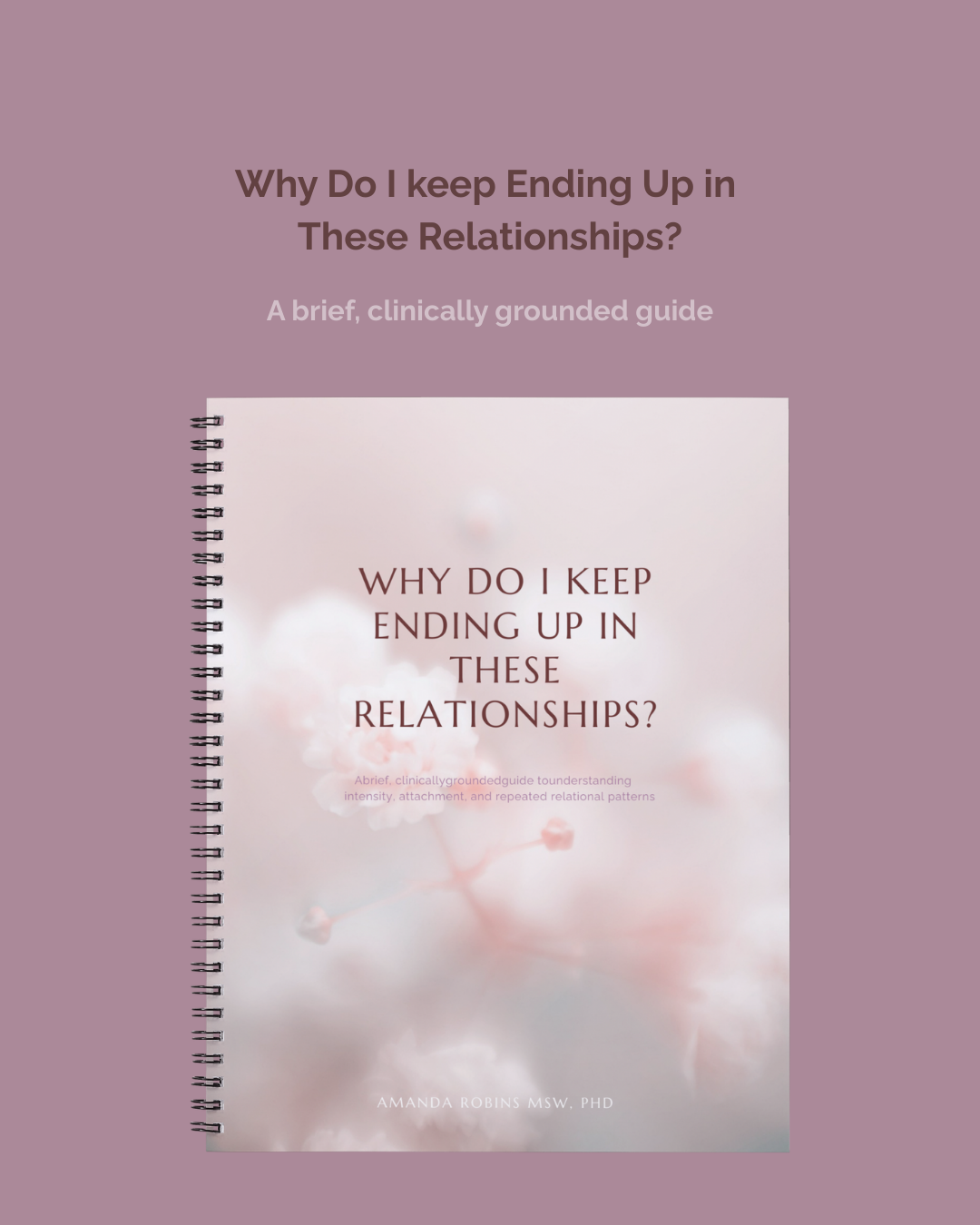
If this article has left you thinking about patterns in your own relationships, my free relationship guide can help you explore them further — including how earlier experiences can shape what feels familiar, how you respond to closeness and conflict, and what can make some relationship patterns difficult to change.
More From Our Blog











Why is it so difficult to leave a narcissistic relationship, even when you know it is hurting you? This article explores the practical, emotional and psychological reasons people stay, including fear, isolation, gaslighting, earlier relationship patterns and the hope that things will change.