

Therapy for Narcissistic Abuse
Narcissistic abuse can leave you questioning yourself, struggling to trust your own perceptions and unsure of what is reasonable to expect in a relationship. Therapy can help you understand what has happened, reconnect with your own needs and begin to develop relationships that feel safer and more reciprocal.
Do you have trouble saying “no” to your partner?
Does your partner/friend/family member get angry when you set limits?
Is it hard for you to do the things YOU enjoy - especially if they don’t coincide with your partner’s wishes?
Do you often give in just to “keep the peace”?
Do you feel like your partner doesn’t listen?
Does your partner/family member deny your reality?
If you complain, do they get angry or abusive, telling you that you are wrong, stupid, “over-sensitive” or fussy?
Do they play the victim by telling you that you are hurting them or being hypercritical? Or by simply denying it?
Does your partner/family member belittle, humiliate, blame or ridicule you?
Do you blame yourself for things in your relationship that are not your fault?
Do you feel like you are in a “fog” when you try to talk about your own needs or set boundaries with your partner?
Is your self-esteem now at an all-time low?
THESE COULD ALL BE SIGNS OF NARCISSISTIC ABUSE.
Narcissistic abuse by someone close to us can also cause symptoms such as:
Guilt, shame and self-blame - a feeling that you are not good enough
Feeling isolated and alone, withdrawing from others, losing friends
Loss of trust
Loss of enjoyment in life
Exhaustion
A constant feeling of anxiety or “walking on eggshells”
Feeling sad or hopeless, like no-one is on your side
Self-soothing with alcohol or food
Prolonged and systematic abuse can lead to Complex Trauma, including symptoms such as flashbacks and hypervigilance
MOVING FORWARD
It can be a shock to come to the realisation that what started out with so much hope and goodwill has developed into a relationship that is exploitative and damaging.
You don’t want to believe that your partner, friend or family member is treating you badly or that they don’t really care about you.
After so many years of loyalty, you would rather think you’ve made a mistake. That if you just tried a bit harder you would get the love you deserve. That if you stay loyal and kind, you will eventually be rewarded.
You keep hoping that your loved one’s behaviour will change.
Unfortunately, hoping that someone will change does not necessarily make the relationship safer or more reciprocal. When patterns of manipulation, blame or emotional abuse are longstanding, it is important to pay attention to what the person actually does rather than continuing to rely on the possibility that things will eventually be different.
MANIPULATION
The manipulation in a relationship with a narcissist can be quite subtle.
Causing you to doubt yourself, they will often deny your version of events and undermine your reality. It can be like living with a skilled prosecutor who wants to win the argument at all costs, including your peace of mind.
It can be easier just to give up.
People in an abusive relationship often feel controlled or dominated, like they don’t matter.
Abusive relationships involve belittling and humiliation, leaving you feeling ashamed and worthless. Emotional abuse in relationships leaves victims with feelings of low self-esteem, shame and hopelessness.
People who are in relationships with narcissists often blame themselves, because they feel like they are “not good enough” or that they’ve done something wrong.
Many people who have suffered in abusive relationships blame themselves. They have been so belittled and humiliated that they end up feeling like they deserve to be treated badly.
Recovery from abuse can take a long time.
Survivors of narcissistic abuse can take years to come to the realisation that their relationship has ultimately come at the cost of their sense of self.
People who experience narcissistic abuse often end up feeling lost.
For some people, this also helps explain why it can be extraordinarily difficult to leave a relationship even when they recognise that it is causing them harm. Trauma bonds can make the attachment itself feel extremely powerful.
They lose their sense of self because their narcissistic partner has dominated and oppressed them for so long that they have forgotten who they are.
Perhaps it didn’t feel safe to say no. To protect yourself you said yes, when you didn’t want to. But now you don’t know how (or when) to assert yourself. It’s been much easier to give in to your narcissistic parent or partner because they have dominated and intimidated you for so long. But that’s no way to live.
Many people are wounded in relationships.
We all make mistakes.
Relationships can be hard work. Arguments are normal for everyone, but a partner who really cares about you will work to repair the damage.
Healthy relationships do not run on contempt, anger, blame, belittling or humiliation.
They do not involve one partner doing all the heavy lifting and giving up their dreams.
They should not resemble battlegrounds where it feels like our self-esteem is at stake.
We sometimes become involved with someone who is not healthy for us without recognising what is happening. The early stages of a relationship may have felt very different: with a new partner who appears to be intensely attentive. We might feel flattered or that the relationship is unusually close. It can take time before controlling, dismissive or self-centred patterns become apparent. By then, we may already be deeply invested in the relationship and struggling to reconcile the person we first encountered with the relationship we are now experiencing.
People who have grown up with narcissistic or emotionally unavailable parents may be particularly vulnerable to these dynamics.
Children of self-absorbed parents believe that a one-sided relationship is all they deserve. They learn not to expect reciprocity, or a partner who really cares for them. Unfortunately, they are used to being exploited.
As we slowly come to realise that our partner or friend is not really there for us, we can feel anger and grief. Someone we love is more concerned with their own needs than with our feelings and our wellbeing.
It can be a shock.
Sometimes we blame ourselves. But it’s important to remember that you haven’t done anything wrong.
If you find yourself repeatedly drawn into relationships in which you give much more than you receive, you may also find my article on why we repeat painful relationship patterns helpful.
When our reality is denied in a relationship, it can feel like we don’t have a voice.
It feels like no-one understands or cares.
Therapy for Narcissistic Abuse Can Help
Therapy can provide a place to begin making sense of what has happened without having your experience dismissed or explained away.
For many people, recovery involves much more than understanding the other person’s behaviour. It also means gradually reconnecting with your own feelings, needs and perceptions after spending a long time adapting to someone else’s.
In therapy, we can explore the patterns that have developed within your relationships, the effect they have had on your sense of self, and the boundaries you may need in order to protect yourself. Over time, the aim is not simply to understand narcissistic abuse, but to help you trust yourself again and develop relationships that are more reciprocal and emotionally safe.
How Does Therapy for Narcissistic Abuse Work?
Therapy begins with understanding your particular experience rather than applying a formula to it. We can look at what has happened in your relationships, how you have learned to respond to conflict or emotional pressure, and what happens when you try to express your own needs or set limits.
For some people, this means working on boundaries and communication. For others, the deeper work involves confronting shame and self-doubt, and grieving for what they may never have had. It might also involve exploring attachment patterns, or recognising a longstanding tendency to put other people’s emotional needs ahead of their own.
The aim is to help you develop a stronger and more compassionate relationship with yourself, so that your choices are increasingly guided by what you actually feel, need and value.
AN EXPERIENCED THERAPIST WILL HELP YOU FEEL SAFE.
In order to heal the deep wounds of narcissistic abuse, your therapist will need to help you access the pain and distress which is buried inside you. They will allow you to sit with strong feelings and learn to experience them without being overwhelmed. You will become stronger and more resilient as you learn to understand and develop compassion for your wounds.

Hi, my name’s Amanda. I’m a psychotherapist and social worker with many years’ experience working with people affected by narcissistic relationships, childhood trauma and emotionally difficult family relationships.
Some of the people I work with have had narcissistic parents or partners; for others it may be a sibling, friend, colleague or another important person in their life. Often one of the first things they need is simply to be able to talk to someone who understands the dynamics involved and takes their experience seriously.
I provide psychotherapy online to adults throughout Australia. My approach is relational, trauma-informed and grounded in the understanding that recovery takes place at an individual pace.
You May Still Have Some Questions About Counselling for Narcissistic Abuse
WHAT IF THERAPY TRIGGERS ME OR I FEEL OVERWHELMED?
Safety is particularly important when you have experienced narcissistic abuse or other difficult relationships. Therapy should not involve pushing you into material that you are not ready to explore.
We will work at a pace that takes account of your individual needs and responses. At times, therapy may bring up difficult feelings, but part of the work is learning to recognise and stay with those feelings without becoming overwhelmed by them.
Do I need to forgive?
Recovery from narcissistic abuse is not about blame or forgiveness. It is entirely up to you whether you have the emotional space to forgive. For some people, forgiveness may become part of moving on, for others, it may not. Everyone’s healing journey is different.
Therapy can give you a different perspective on your experiences and help you understand the reality of your relationships more clearly. As you develop a better understanding of your parent or partner’s limitations, you can make more informed choices about the way forward.
Alongside growing self-compassion, you may also come to understand something about the experiences or trauma that contributed to the other person’s behaviour. Understanding why someone behaves as they do does not mean excusing the harm they have caused, nor does it require forgiveness. You may eventually find that you have space for compassion towards someone who has caused you pain, but that is something only you can decide.
IT SOUNDS LIKE THIS WILL TAKE A WHILE: HOW WILL I KNOW THAT IT IS WORKING?
Therapy for narcissistic abuse involves developing a therapeutic relationship in which you can gradually feel able to talk openly about your experience without being judged, dismissed or shamed. This can be particularly important if you have spent a long time questioning your own perceptions or adapting yourself to someone else’s needs.
Part of this can involve developing greater compassion for the ways you learned to manage the relationship, recognising that many of those responses developed as ways of protecting yourself.
Change may not always be dramatic. You might begin to notice that you recognise your own feelings more readily, question yourself less, or feel more able to say no without immediately feeling guilty. You may become clearer about what is and isn’t acceptable to you in relationships.
Over time, the aim is for these changes to become part of a stronger sense of self: greater trust in your own perceptions, more confidence in your boundaries, and more freedom to choose relationships that allow for genuine reciprocity.
I’VE HEARD THAT THERAPY IS EXPENSIVE – HOW WILL I AFFORD ALL THIS – ESPECIALLY IF IT TAKES A LONG TIME?
Medicare rebates are available to eligible clients with a Mental Health Treatment Plan. I do not currently bulk bill.
If money is providing an obstacle to beginning (or continuing) therapy, we can discuss how to make it more affordable for you.
What Can I Expect From Therapy for Narcissistic Abuse?
Coming to terms with narcissistic abuse can involve grief, anger, disbelief and self-blame. You may be trying to understand how the relationship became so damaging, why you stayed, or why it has been so difficult to trust your own judgement.
Therapy gives us an opportunity to explore these questions without reducing your experience to a set of rules about what you should or shouldn’t have done.
As the work develops, you may begin to recognise your own needs more clearly, establish boundaries with greater confidence and become less vulnerable to manipulation or pressure from other people. We can also look at the relationship patterns that may have made it difficult to recognise when your needs were being overlooked.
I will work with you to develop a deeper and more compassionate relationship with yourself, where the pain and shame you have experienced in the past no longer dominate.
As you develop greater self-awareness and self-compassion, you can begin to make choices that are more firmly grounded in your own needs, values and sense of who you are.
Ready to Begin?
Online Course for Daughters of Narcissistic Mothers

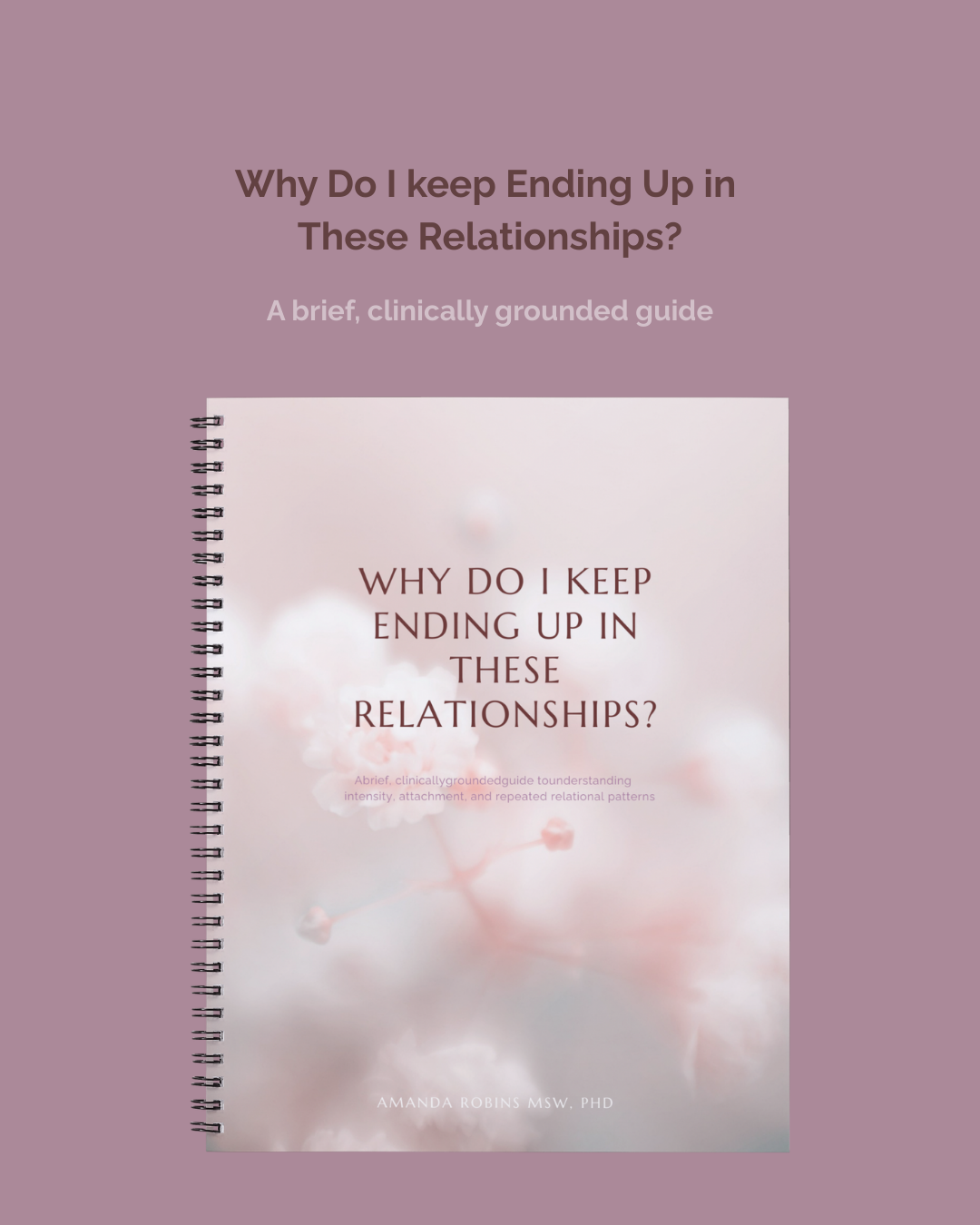
Do You Keep Finding Yourself in the Same Painful Relationships?
My free guide explores why painful relationship patterns can repeat, and how our earlier experiences can shape the relationships we form as adults.
Is Your Mother a Narcissist?
Download my free ebook here.















Coming into the orbit of someone who is narcissistic can be exciting, confronting and dangerous. How can we recognise what is happening and why we are seduced?